Front page · Cosyford Railway
Kiss the buffers, toot for the crossing: Cosyford’s goods railway wants a driver
Planks, girders, paper reels and straw bales, trundling between the town’s businesses behind a big blue battery loco called Bluebell. Sid Points has kept the timetable for forty years, and he’d like a hand.

Orders come in by phone from businesses round town: the Steelworks wants scrap and stone, the Woodshop wants planks and logs, the Port wants a container or two. The ticket lists the wagons in order, front to back, and your first job is to make up the train in the goods yard. Tap the wagon you want, and Pip, a small green battery shunter, trundles into the siding for it. The last few metres are yours: hold to creep up, and let go to stop. A yellow bar on the rails shows where Pip will stop if you let go now. Just kiss the buffers and it counts as a perfect coupling. Come in too fast and there is a BANG, and Sid’s tea goes everywhere.
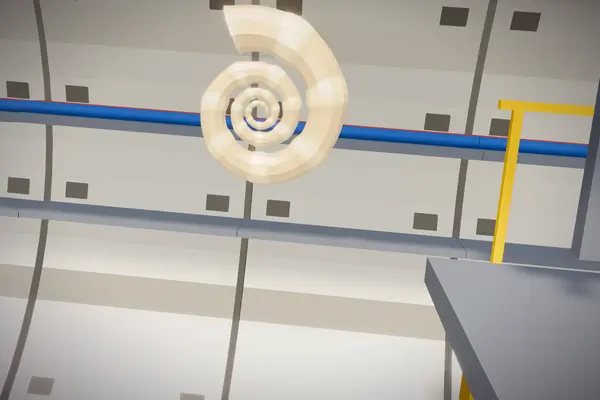
Pip tucks each wagon on behind Bluebell. Once the train is made up, drag the charging plug into Bluebell’s socket (the power comes from the wind farm on the ridge), and when the signal goes green, hold to drive. Letting go brings on the brakes. Toot the horn at the W board for the level crossing, where the barriers come down and a waiting car flashes its lights. Ease off for the yellow signals, through the tunnel under Beacon Hill and into the Exchange Sidings. The children on the farm footbridge always wave, and they wave harder if you toot.
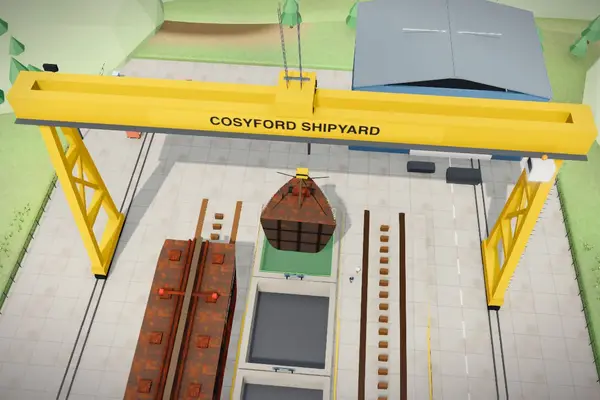
The big moment is the viaduct, five stone arches over the river gorge, with the camera down by the water watching the whole train go across. Then you stop with Bluebell’s nose on the white line at the Exchange Sidings (the yellow bar on the rails helps again), and the gantry crane lifts every load off onto the dock. Gentle couplings, a toot for the crossing, smooth driving and a stop right on the line all add to the pay. Save up for knuckle couplers, bigger traction motors, regenerative brakes and a kettle for Sid’s signal box.